This guide explores the critical intersection of long-term planning and modern security. In an era where digital footprints and physical assets are equally vulnerable, "protecting what matters most" requires more than just a locked door or a strong password—it requires a system that honors your history while securing your future.
Legacy & Logic: A Guide to Protecting What Matters Most
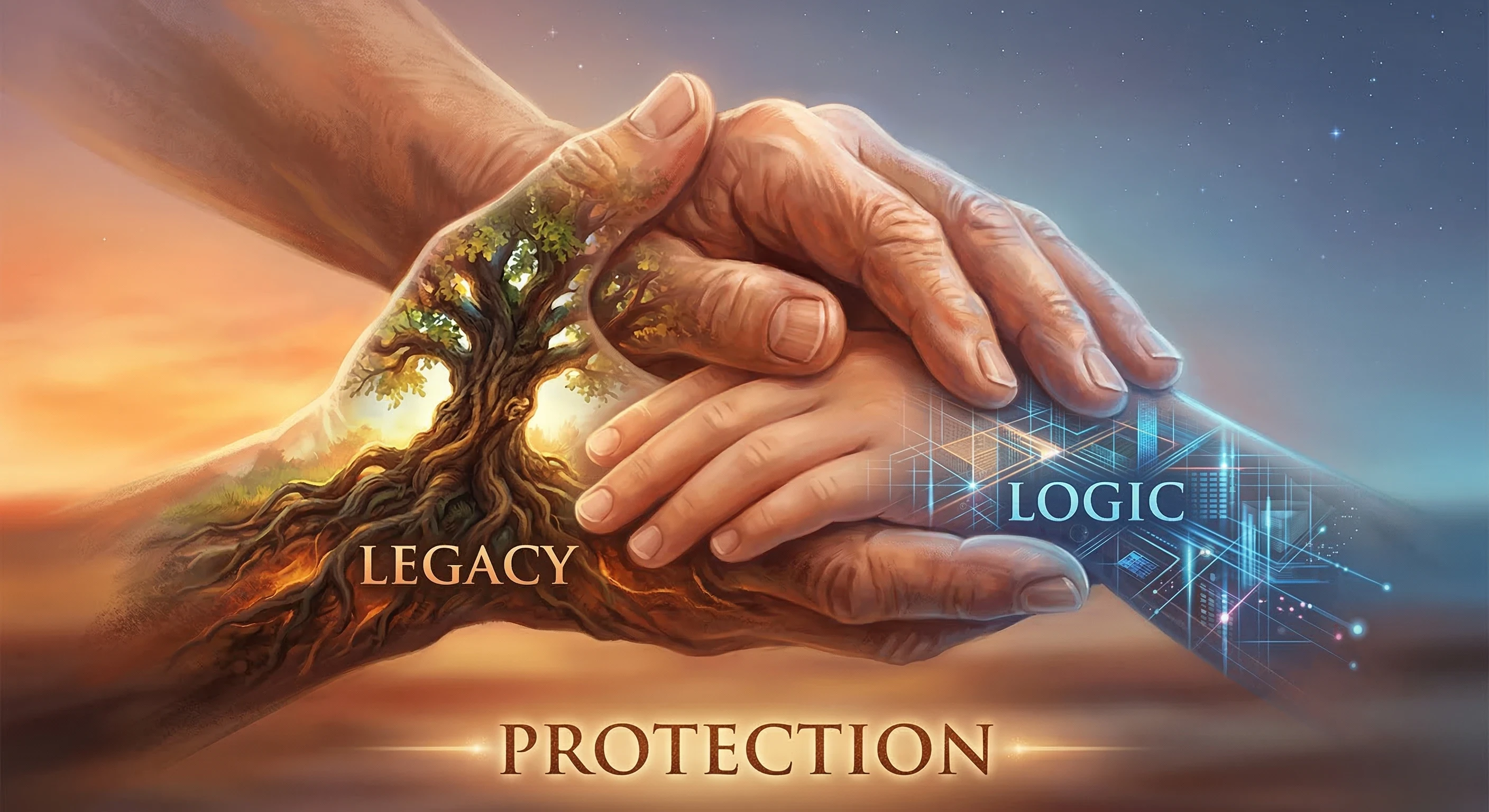
In an era defined by rapid digital transformation and increasing global volatility, the concept of "protection" has shifted. It is no longer enough to simply lock the front door or buy a basic insurance policy. True security in the 21st century requires a dual-lens approach: Legacy, the emotional and historical weight of what we build, and Logic, the cold, hard systems we use to defend it.
To protect what matters most—whether that is a family business, a digital archive, or generational wealth—you must bridge the gap between sentiment and strategy. This guide explores how to build a fortress around your life’s work using a framework that is as compassionate as it is calculated.
I. Defining the Legacy: What Are You Actually Protecting?
Before we apply logic, we must identify the legacy. Most people make the mistake of protecting assets based on their monetary value alone. However, a "legacy" is rarely just a number in a bank account. It is a combination of three distinct pillars:
1. The Tangible Legacy
These are the physical assets. It includes your home, your physical business locations, heirlooms, and your financial portfolio. Logic dictates that these are the easiest to value but often the most difficult to replace emotionally.
2. The Digital Legacy
In the modern age, your legacy lives on servers. This includes your intellectual property, your professional reputation (LinkedIn, personal branding), and your private data (photos, correspondence, and creative works). If your digital legacy is compromised, your physical legacy often follows.
3. The Intellectual & Emotional Legacy
This is the "why" behind what you do. It’s the values you want to pass down to your children or the mission statement of the company you founded. This is the most fragile part of the equation because it cannot be "insured" in the traditional sense—it must be curated.
II. The Logic of Risk: A Framework for Defense
Once you have identified your legacy, you must apply a logical framework to defend it. Logic removes the "it won't happen to me" bias and replaces it with a cold assessment of probability and impact.
The Risk Assessment Matrix
To protect your legacy, you must evaluate every threat through a simple formula:
-
High Probability/High Impact: These are your "Red Zones" (e.g., cyberattacks, lack of a will, or physical health decline). These require immediate, logical systems.
-
Low Probability/High Impact: Often called "Black Swan" events. You protect these via insurance and emergency contingencies.
Systematizing Your Security
Logic thrives on systems. If you rely on memory or "gut feeling" to protect your assets, you have a single point of failure. A logical protection plan involves:
-
Redundancy: Never having just one backup of a file or one successor for a business role.
-
Encryption: Moving from "strong passwords" to biometric and hardware-based security.
-
Legal Fortification: Using trusts, LLCs, and ironclad contracts to ensure that emotions don't dictate the fate of your assets during a crisis.
III. Protecting the Family: The Heart of the Legacy
For most, the "Legacy" starts and ends with family. However, this is where logic is often ignored in favor of comfort. We avoid "the talk" about estate planning or end-of-life wishes because it feels morbid.
The Logical Reframe: Avoiding these conversations isn't an act of love; it’s an act of negligence.
The Estate Planning Blueprint
A legacy without a logical legal structure is just a mess for your heirs to clean up. At a minimum, protecting what matters most requires:
-
A Living Will: Ensuring your medical and financial wishes are honored if you cannot speak for yourself.
-
Revocable Living Trusts: To avoid the "logic-gap" of probate court, which can drain a legacy of its value and privacy.
-
The "Digital Vault": A centralized, encrypted location where your survivors can find passwords, deeds, and instructions.
IV. Protecting the Business: Logic in Leadership
If your legacy is a business, the "Logic" side of the equation becomes even more rigorous. A business that depends entirely on its founder is not a legacy; it’s a job. To protect a business legacy, you must transition from Hero Leadership to Systemic Leadership.
Succession as Protection
Logic dictates that you are a "single point of failure." To protect the business:
-
Document the "Secret Sauce": Turn your intuitive knowledge into operating procedures.
-
Identify Key-Man Risk: Ensure the business can survive if any one person (including you) is suddenly removed from the equation.
-
Cyber Resilience: In an era of ransomware, your business legacy is only as strong as your last offline backup.
V. The Modern Threat: The Digital Frontier
We cannot talk about "Logic" without addressing the digital world. Your legacy is now vulnerable to threats that didn't exist twenty years ago. Identity theft, deepfakes, and data breaches can dismantle a reputation in hours.
Implementing Digital Logic
-
Zero Trust Architecture: Assume every link is malicious until proven otherwise. This logic applies to your personal emails just as much as a corporate network.
-
Data Sovereignty: Who owns your legacy? If your life’s work is stored on a single cloud platform, you don't own it—you’re renting it. Logic suggests keeping physical, "cold" copies of your most important intellectual property.
VI. Bridging the Gap: When Logic Meets Legacy
The final stage of protecting what matters most is the integration of these two concepts. You use logic to build the walls, but the legacy is what lives inside them.
The Annual Audit
Every year, your logic must be updated. Laws change, technology evolves, and your family or business grows. A "Legacy Audit" should involve:
-
Reviewing beneficiaries on insurance and retirement accounts.
-
Updating software and rotating sensitive keys/passwords.
-
Checking the "emotional pulse" of your legacy—are your actions still aligned with the values you want to be remembered for?
Conclusion
The Peace of Mind Protocol
Protecting what matters most is not a one-time event; it is a lifestyle of intentionality. By combining the Legacy (the heartbeat of your life’s work) with Logic (the structural integrity of your defenses), you create something that is truly resilient.
You don't build a fortress because you are afraid; you build it because what you have created is worth the effort. Logic provides the "how," but Legacy provides the "why." Together, they ensure that your impact on the world remains secure, long after you’ve moved on to the next chapter.
Disclaimer: This article is provided for general informational purposes only and does not constitute legal advice. Every legal situation is unique, and you should consult with a qualified attorney regarding your specific circumstances. Reading this article does not create an attorney-client relationship with Mandi Law Group.
Share This Article
§Talk to us
Questions About Immigration Law Guides?
If you have questions related to the topics discussed in this article, our attorneys are available to provide guidance specific to your situation.